
Fridge care guide
Fridge Maintenance Tips: How to Keep Your Fridge Running Longer
A fridge works 24 hours a day, every day. A few simple habits help it cool properly, use less electricity and avoid the breakdowns that leave you with spoiled food. Here's what our technicians recommend for South African homes.
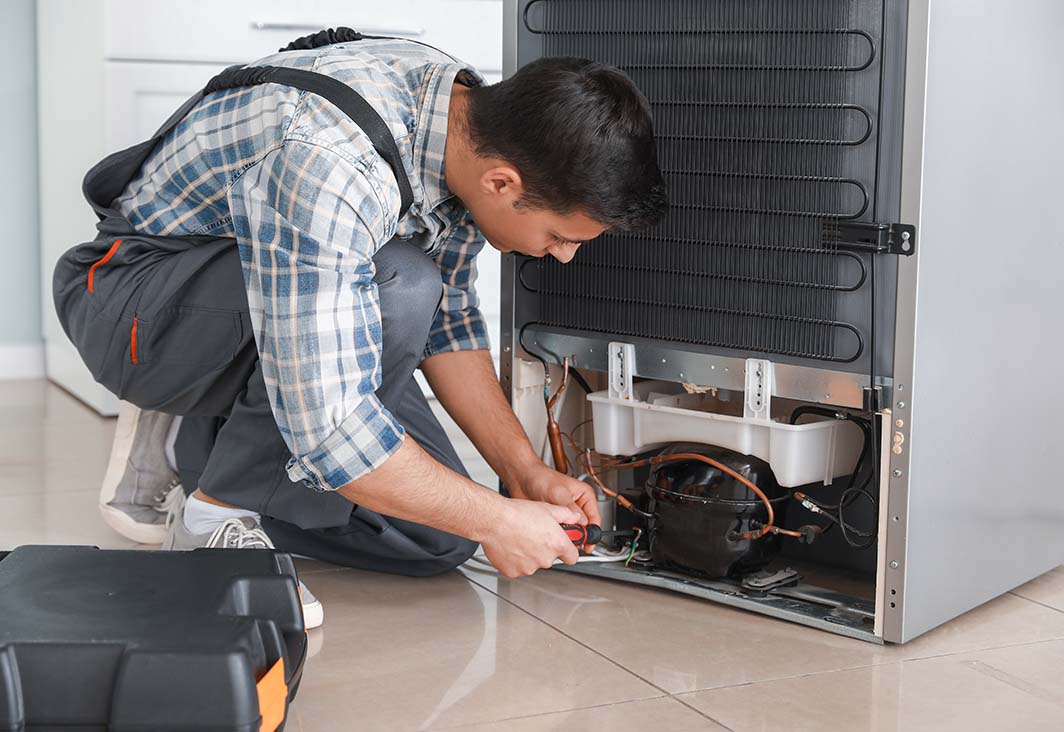
8 fridge maintenance tips that actually make a difference
Most fridge breakdowns we see could have been delayed, or avoided, with a little regular care. None of these tips need tools. Always unplug the fridge before cleaning anything at the back.
Keep the condenser coils clean
The coils at the back or underneath release the heat your fridge removes from inside. Dust and pet hair act like a blanket. Every 6–12 months, unplug the fridge and gently vacuum them with a brush attachment.
Why it matters: dirty coils make the compressor work harder and longer, which raises your electricity bill and shortens its life.Check the door seals
Close the door on a sheet of paper. If it slides out easily, the seal isn't gripping. Wipe seals with warm soapy water every month or two, since sticky food residue stops them closing properly.
Why it matters: a leaking seal lets warm air in, causing frost build-up, poor cooling and a fridge that never switches off.Leave space around the fridge
Keep a gap of about 5–10 cm behind and above the fridge so heat can escape. Avoid squeezing it into a tight cupboard or placing it next to the oven or in direct sun.
Why it matters: a fridge that can't breathe overheats and works harder in our hot Gauteng summers.Don't overpack it, but don't run it empty
Cold air needs to circulate, so don't block the vents with containers. A reasonably full fridge holds its temperature better than an empty one, which loses cold every time you open it.
Why it matters: blocked vents cause warm spots, food freezing in one area and uneven cooling.Let hot food cool down first
Allow cooked food to cool to room temperature (within about two hours) before putting it in the fridge, and cover it to reduce moisture.
Why it matters: hot pots force the fridge to work overtime and add moisture that turns into frost.Keep the drain hole clear
Many fridges have a small drain hole at the back of the fridge compartment that carries away defrost water. Wipe the area regularly so food bits don't block it.
Why it matters: a blocked drain is a common cause of water pooling inside the fridge or leaking onto the floor.Defrost manual freezers regularly
If your freezer isn't frost-free, defrost it when ice builds up to about 5 mm thick. Never chip ice away with a knife, because you can puncture the gas lines.
Why it matters: thick ice insulates the freezer from its own cooling, so it uses more power and freezes less.Keep it level
A fridge that leans forward or sideways can stop the doors sealing and affect drainage. Adjust the front feet so it sits level, with the doors closing on their own.
Why it matters: doors that don't swing shut are easy to leave slightly open, and the fridge runs constantly.
The right temperature for your fridge and freezer
Many fridges are set colder than they need to be, which wastes electricity, or warmer, which spoils food faster. Aim for:
If your fridge only has a numbered dial, the middle setting is a good starting point. A cheap fridge thermometer helps you check. If your fridge can't reach these temperatures even on its coldest setting, that's a sign of a fault, not a setting problem.
Protecting your fridge from power cuts and load-shedding
Power cuts and surges are one of the biggest causes of fridge breakdowns we see in Gauteng, especially damaged control boards, relays and compressors.
- Use a surge protector or plug with surge protection. Power often returns with a spike that can damage electronics and the compressor.
- Keep the doors closed during an outage. A closed fridge keeps food cold for about 4 hours. A full freezer can hold for up to about 48 hours, a half-full one for about 24.
- Don't switch it on and off repeatedly. When the power returns, give the fridge time to restart on its own. Many have a built-in delay to protect the compressor.
- Watch for changes after an outage. If the fridge won't start, trips the power or stops cooling after load-shedding, have it checked before the damage spreads.
Signs your fridge needs a technician
Good care prevents many problems, but parts still wear out. Call a technician if you notice any of these:
- Not cooling, or the freezer not freezing
- Water leaking inside or under the fridge
- Heavy frost building up quickly
- New buzzing, clicking or grinding noises
- The motor running all the time
- Fridge dead or tripping after a power cut

Problems like a gas leak, a failing compressor or a faulty control board can't be fixed with maintenance, and DIY attempts often make them worse. Read more about our on-site fridge repair service.
Fridge care FAQs
How often should a fridge be serviced?
Clean the condenser coils every 6–12 months and check the door seals every few months. A professional check is worth it if the fridge is running constantly, building frost or not holding its temperature.
How long does a fridge usually last?
Most household fridges last around 10–15 years with good care. Many common faults, such as thermostats, fans, relays and door seals, can be repaired for far less than the cost of a new fridge.
Why is my fridge running all the time?
Common causes are dirty condenser coils, a worn door seal, poor ventilation around the fridge, or a fault such as low gas or a faulty thermostat. If cleaning and checking the seal don't help, have it diagnosed.
Is it safe to keep using a fridge that isn't cooling properly?
Food in a fridge above about 5°C spoils faster and can become unsafe. Running a faulty fridge can also strain the compressor further, so it's best to have it checked early.
Fridge not cooling, leaking or noisy?
Our technicians repair fridges at your home across Johannesburg, Centurion and Pretoria. Quote before any work, call-out waived if you go ahead, and a 6-month repair guarantee.