Genuine parts
Brand-matched compressors, thermostats, seals, and boards fitted correctly, rather than a generic part that fails again in a few months.

Home / Blog / Fridge Not Cooling
FRIDGE REPAIR · JOHANNESBURG & CENTURION
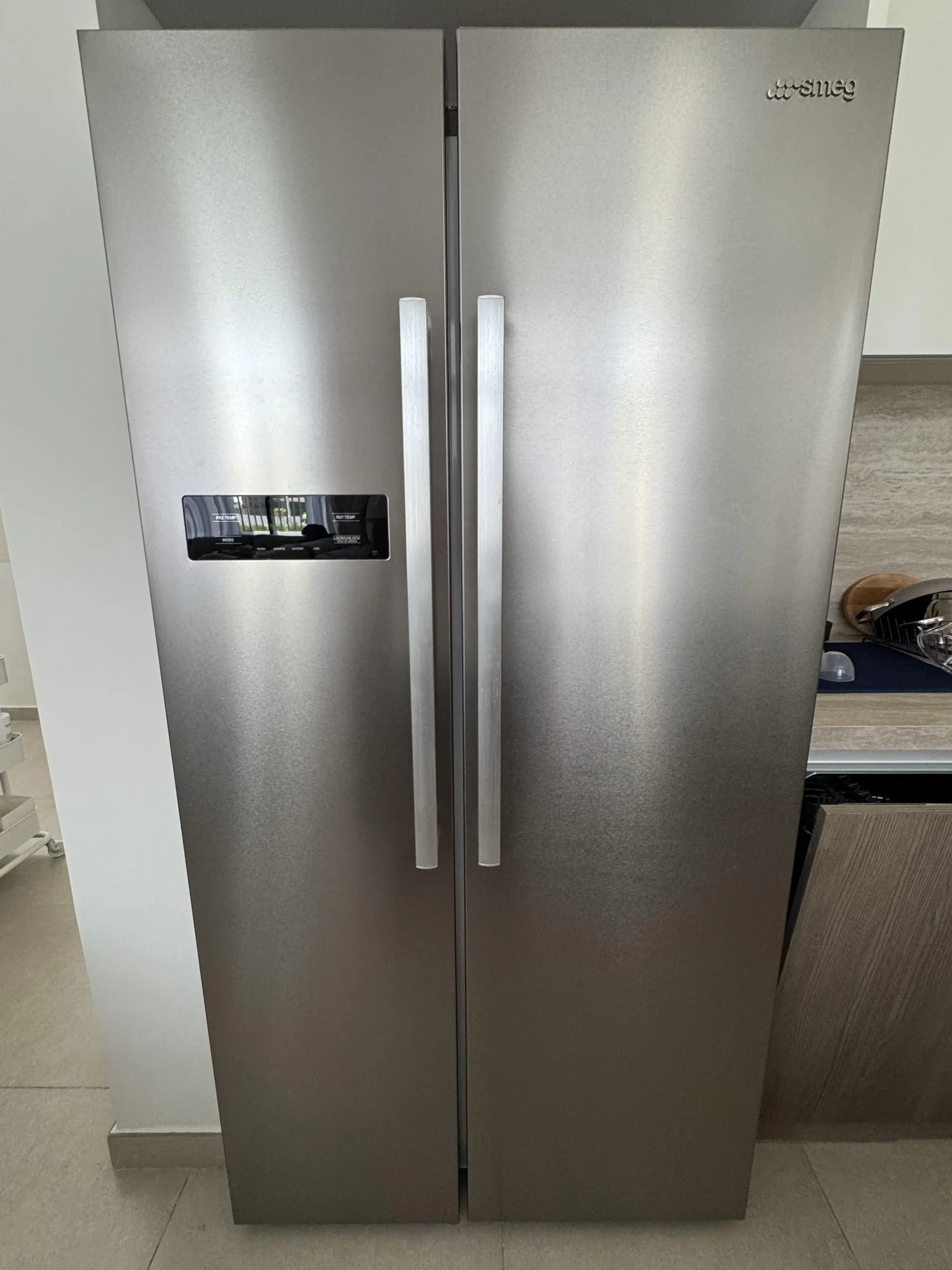
A fridge that's warm, noisy, leaking, or running non-stop is almost always one of a handful of faults — and most can be diagnosed on the first visit. Here's how to tell what's wrong before you book a repair.
Failed compressor, faulty start relay, or a thermostat stuck open.
Usually a blocked or frosted-up evaporator, a failing door seal, or a dying compressor working overtime.
Blocked defrost drain, damaged door seal, or a cracked drip tray.
Often a failing compressor, a fan motor with worn bearings, or the unit not sitting level.
Faulty defrost heater, defrost timer, or a door seal letting in warm, moist air.
WHY IT'S WORTH CALLING SOMEONE
Unlike most appliances, your fridge never really switches off. A minor issue — a weak seal, a struggling fan, a slow refrigerant leak — forces the compressor to work harder than it should, which shortens its life and pushes up your power bill long before the fridge actually stops cooling.
Anything involving the sealed refrigerant system needs specialised tools, gauges, and a technician licensed to handle refrigerant gas safely and legally. Guessing here can turn a small leak into a full system replacement.
WHAT WE GET CALLED OUT FOR MOST
If you're seeing any of these, it's worth booking a technician before the fault causes your food to spoil.
Check the power and the thermostat setting first — if those are fine, it's usually a failed compressor, a faulty start relay, or a stuck thermostat.
Often points to a frosted-up evaporator restricting airflow, a worn door seal letting cold air escape, or a compressor that's losing efficiency.
Usually a blocked defrost drain sending water the wrong way, or a damaged door seal or drip tray.
A buzzing or clicking compressor, a fan motor with worn bearings, or simply a fridge that isn't sitting level — each has a distinct sound a technician can identify quickly.
Points to a faulty defrost heater or timer, or a seal letting warm, moist air in that keeps refreezing on the coils.
A 5-MINUTE CHECK
These checks rule out the simplest causes. If the fault's still there afterwards, it's a job for a technician.
Confirm the fridge is firmly plugged in, the breaker hasn't tripped, and the thermostat dial hasn't been knocked to a warmer setting.
Run a finger around the rubber gasket on both doors for tears, flattening, or gaps — a damaged seal is a common, inexpensive fix.
Make sure there's at least a few centimetres of space around the unit so the compressor and coils can actually vent heat.
Open the freezer and look for heavy ice build-up on the back wall, and check that vents inside aren't blocked by packed-in food.
WORKING WITH A CERTIFIED TECHNICIAN
Brand-matched compressors, thermostats, seals, and boards fitted correctly, rather than a generic part that fails again in a few months.
Parts and labour are covered, so if the same fault returns, you're not paying for it twice.
Sealed-system work is done with the right tools and gas-handling certification — not guesswork with a compressor under pressure.
You'll be told plainly whether it's worth repairing or whether replacement makes more financial sense, especially on older units.
PRICING
The honest answer is "it depends on the fault" — but here's the shape of it, so you're not going in blind.
Covers the technician's visit and a full diagnosis, credited toward the repair if you go ahead.
Door seals, thermostats, fan motors, and drain blockages typically fall in this range.
Major component replacements — a compressor, sealed-system repair, or control board — cost more, but you'll always get a written quote before any work begins. No surprises on the invoice.
MAINTENANCE
Dust build-up on the coils at the back or underneath makes the compressor work harder and shortens its lifespan.
A quick visual and "dollar bill" check catches a perishing gasket before it starts costing you in escaped cold air.
Blocked vents and overpacked shelves restrict airflow, forcing some areas to run warmer than others.
An unlevel fridge or one pushed flush against a wall traps heat around the compressor and speeds up wear.
WHO TO CALL
WHERE WE WORK
We send technicians who know the area, the housing stock, and the appliances — not a dispatcher reading from a script.
Send a technician a WhatsApp message with the fault and your suburb, or call directly — most call-outs in Johannesburg and Centurion are handled the same day.